




What is the lifespan of U Wire in a humid environment?
 Jun 18, 2025|
Hey there! As a U Wire supplier, I often get asked about how long U Wires can last, especially in a humid environment. It's a crucial question because humidity can really throw a wrench in things when it comes to the lifespan of metal products. So, let's dig into what affects the lifespan of U Wires in a humid setting and how you can make them last as long as possible.
What's a U Wire Anyway?
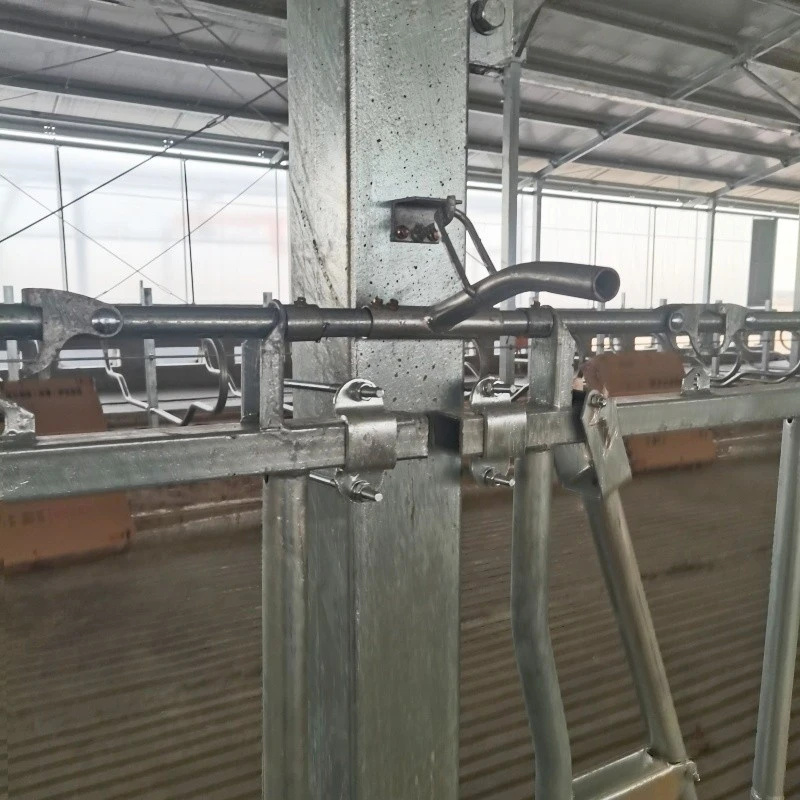
First off, for those who aren't in the know, U Wires are these nifty little pieces of metal shaped like the letter "U." They're used in all sorts of industries, from agriculture to construction. In the agricultural world, they're often used in Headlock systems, like Cow Headlocks and Hot Galvanized 750 mm Cow Headlock. They help keep cows in place during feeding or medical procedures. In construction, U Wires can be used to secure fencing or hold together different parts of a structure.
How Humidity Affects U Wires
Humidity is basically the amount of water vapor in the air. When U Wires are exposed to a humid environment, the water vapor in the air can react with the metal in the wires. This reaction can lead to corrosion, which is like the metal's worst enemy. Corrosion eats away at the metal, weakening it over time and eventually causing it to break down.
The rate of corrosion depends on a few factors. One of the biggest factors is the type of metal the U Wire is made of. Some metals are more resistant to corrosion than others. For example, stainless steel is known for its corrosion resistance because it contains chromium, which forms a protective layer on the surface of the metal. On the other hand, regular steel is more prone to corrosion in a humid environment.
Another factor is the level of humidity. The higher the humidity, the faster the corrosion process will be. In a very humid environment, like a coastal area or a poorly ventilated barn, the water vapor in the air can condense on the surface of the U Wires, creating a thin layer of water. This layer of water acts as an electrolyte, which speeds up the corrosion reaction.
Estimating the Lifespan
So, what's the lifespan of U Wires in a humid environment? Well, it's not an easy question to answer because there are so many variables at play. But we can make some general estimates based on the type of metal and the level of humidity.
If you're using U Wires made of regular steel in a moderately humid environment (around 50 - 60% relative humidity), you might expect them to last anywhere from 1 to 3 years. In a more humid environment (70 - 80% relative humidity), the lifespan could be reduced to 6 months to 2 years. And in a very humid environment (over 80% relative humidity), the U Wires might only last a few months before they start to show significant signs of corrosion.
On the other hand, if you're using U Wires made of stainless steel, you can expect a much longer lifespan. In a moderately humid environment, stainless steel U Wires could last 10 years or more. Even in a very humid environment, they might last 5 to 10 years.
Extending the Lifespan
The good news is that there are some things you can do to extend the lifespan of U Wires in a humid environment. One of the most effective ways is to choose the right type of metal. As we mentioned earlier, stainless steel is a great choice because of its corrosion resistance. Another option is to use galvanized steel, which has a layer of zinc coating on the surface. The zinc acts as a sacrificial anode, which means it corrodes first, protecting the underlying steel.

You can also take steps to reduce the humidity around the U Wires. In an agricultural setting, you can improve ventilation in the barn to reduce the amount of moisture in the air. You can also use dehumidifiers to remove excess water vapor. In a construction setting, you can make sure that the U Wires are installed in a dry location and protected from direct exposure to rain or moisture.
Regular maintenance is also important. You should inspect the U Wires regularly for signs of corrosion, such as rust or pitting. If you notice any signs of corrosion, you can clean the U Wires and apply a protective coating, such as paint or oil, to slow down the corrosion process.
Conclusion
In conclusion, the lifespan of U Wires in a humid environment depends on a variety of factors, including the type of metal, the level of humidity, and the maintenance practices. By choosing the right type of metal, reducing the humidity, and performing regular maintenance, you can extend the lifespan of U Wires and get the most out of your investment.
If you're in the market for U Wires, whether it's for agricultural or construction purposes, I'd love to help you find the right product for your needs. We offer a wide range of U Wires made of different metals and sizes, and we can provide you with expert advice on how to choose the best option for your specific situation. So, don't hesitate to reach out and start a conversation about your procurement needs. Let's work together to find the perfect U Wires for your project!
References
- Corrosion Science: Principles and Engineering Applications by George S. Frankel
- Handbook of Corrosion Data by Bruce D. Craig
- Agricultural Engineering Handbook by American Society of Agricultural and Biological Engineers