




What is the working pressure range of a solid liquid separator?
 Jan 15, 2026|
 The working pressure range of a solid - liquid separator is a crucial factor that determines its efficiency, performance, and the quality of separation it can achieve. As a solid - liquid separator supplier, we understand the importance of having a clear understanding of this parameter for our customers.
Understanding Solid - Liquid Separation
Solid - liquid separation is a fundamental process in various industries, including wastewater treatment, food and beverage production, agriculture, and mining. The goal of this process is to separate a mixture of solids and liquids into two distinct phases: a solid phase and a liquid phase. This separation can be accomplished through different methods, such as filtration, sedimentation, centrifugation, and pressing.
Factors Influencing the Working Pressure Range
The working pressure range of a solid - liquid separator is influenced by several factors. Firstly, the nature of the feed material plays a significant role. If the feed contains large, rigid particles, a higher pressure may be required to force the liquid through the solid matrix. On the other hand, if the particles are small and easily deformable, lower pressures may be sufficient.
The type of separation method employed also affects the pressure range. For example, in a filtration - based solid - liquid separator, the pressure is used to drive the liquid through the filter medium. The porosity and permeability of the filter medium are key factors here. A more porous and permeable medium will require less pressure to achieve the same level of separation compared to a less porous one.
The design and construction of the separator itself also contribute to the working pressure range. The strength of the separator's housing, the sealing mechanisms, and the efficiency of the pressure - generating components all need to be considered. High - pressure applications require a robust and well - engineered separator to ensure its safe and reliable operation.
Typical Working Pressure Ranges
In general, solid - liquid separators can operate across a wide range of pressures. Low - pressure separators typically operate in the range of 0.1 to 1 bar (14.5 to 145 psi). These separators are often used for applications where the separation is relatively easy, such as separating large particles from a liquid with low viscosity. For instance, in some simple agricultural applications where manure is being separated, a low - pressure separator may be sufficient. You can check out our 7.5kw Manure Separator Dewatering Machine which is suitable for such low - pressure separation tasks.
Medium - pressure separators usually work in the range of 1 to 10 bar (14.5 to 1450 psi). These are more commonly used in industrial applications where the separation is more challenging. For example, in the food and beverage industry, separating solids from a thick slurry may require a medium - pressure separator. The pressure helps to break down the structure of the slurry and force the liquid through the filter or separation mechanism.
High - pressure separators can operate at pressures above 10 bar (1450 psi). These are often used in specialized applications such as in the production of high - purity chemicals or in some advanced wastewater treatment processes. The high pressure allows for a more efficient and thorough separation, even for very fine particles and difficult - to - separate mixtures. Our 11kw Solid Liquid Separator is designed to handle high - pressure operations and can provide excellent separation performance in demanding applications.
Auger Shaft and Pressure in Solid - Liquid Separators
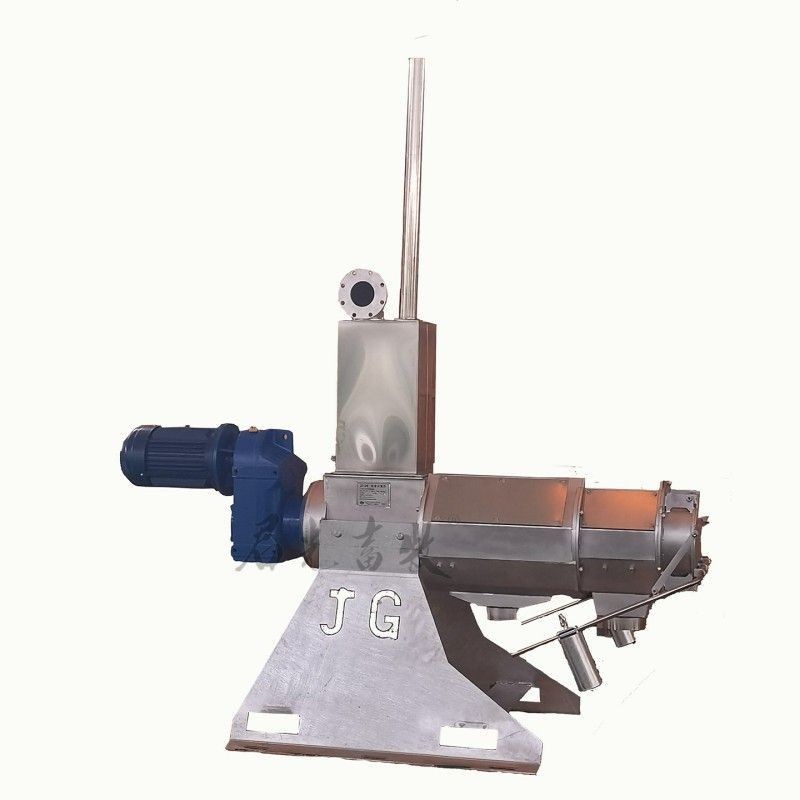
An important component in many solid - liquid separators is the Auger Shaft. The auger shaft is responsible for transporting the solids within the separator and can also contribute to the pressure build - up. As the auger rotates, it compresses the solids, which in turn increases the pressure on the liquid, forcing it to separate from the solids. The design and operation of the auger shaft can have a significant impact on the overall working pressure range of the separator. For more detailed information about the Auger Shaft, you can visit our Auger Shaft page.

Importance of Correct Pressure for Optimal Performance
Using the correct pressure in a solid - liquid separator is crucial for achieving optimal performance. If the pressure is too low, the separation may be incomplete, resulting in a significant amount of liquid remaining in the solid phase or vice versa. This can lead to inefficiencies in downstream processes and may also affect the quality of the final products.
Conversely, if the pressure is too high, it can cause damage to the separator components, such as the filter medium or the housing. It may also lead to excessive wear and tear, increasing maintenance costs and reducing the lifespan of the equipment. Additionally, high pressures can sometimes cause the solids to become compacted too tightly, which can actually impede the separation process.
Selecting the Right Solid - Liquid Separator Based on Pressure
When choosing a solid - liquid separator, it is essential to consider the working pressure range required for your specific application. You need to evaluate the characteristics of the feed material, the desired separation efficiency, and the overall throughput. Our team of experts can assist you in analyzing your requirements and selecting the most suitable separator with the appropriate working pressure range.
We offer a wide range of solid - liquid separators to meet the diverse needs of our customers. Whether you require a low - pressure separator for simple applications or a high - pressure separator for more demanding tasks, we have the solution for you. Our products are designed with the latest technology and high - quality materials to ensure reliable and efficient operation.
Contact Us for More Information
If you are interested in learning more about the working pressure range of our solid - liquid separators or if you have specific requirements for your application, we encourage you to contact us. Our knowledgeable sales team is ready to assist you with any questions you may have and can provide detailed information about our products and their capabilities. We look forward to discussing how our solid - liquid separators can help you achieve your separation goals.
References
- Perry, R. H., & Green, D. W. (Eds.). (2008). Perry's Chemical Engineers' Handbook. McGraw - Hill.
- Svarovsky, L. (2000). Solid - Liquid Separation. Butterworth - Heinemann.