




Are moveable rods resistant to UV rays?
 Dec 10, 2025|
As a supplier of moveable rods, one question that frequently arises from our clients is whether our moveable rods are resistant to UV rays. This is a crucial concern, especially for those who plan to use these rods in outdoor environments where they will be exposed to sunlight for extended periods. In this blog post, I will delve into the science behind UV resistance, explain how our moveable rods fare against UV rays, and provide some insights into maintaining the longevity of these products in outdoor settings.
Understanding UV Rays and Their Impact
Ultraviolet (UV) rays are a form of electromagnetic radiation emitted by the sun. They are categorized into three types: UVA, UVB, and UVC. UVC rays are mostly absorbed by the Earth's atmosphere and do not pose a significant threat at the surface. However, UVA and UVB rays can reach the Earth and have detrimental effects on various materials.
UVA rays have a longer wavelength and can penetrate deeper into materials. They are responsible for causing long - term degradation, such as fading, embrittlement, and loss of strength. UVB rays have a shorter wavelength and are more energetic. They can cause immediate damage to the surface of materials, leading to cracking, discoloration, and surface erosion.
When materials are exposed to UV rays over time, the chemical bonds within them can break down. This process is known as photodegradation. In polymers, for example, UV rays can break the carbon - carbon and carbon - hydrogen bonds, leading to a change in the material's molecular structure and properties.
UV Resistance of Our Moveable Rods
Our moveable rods are engineered to withstand the harsh effects of UV radiation. We use high - quality materials that have inherent UV - resistant properties. These materials are carefully selected and tested in our laboratories to ensure they meet the highest standards of durability and performance.
One of the key materials used in our moveable rods is a specially formulated polymer. This polymer contains additives that act as UV stabilizers. These stabilizers work by absorbing the UV rays and converting the energy into heat, which is then dissipated. This process prevents the UV rays from reaching the polymer chains and causing damage.
In addition to the UV stabilizers, the surface of our moveable rods is treated with a protective coating. This coating provides an extra layer of defense against UV rays and other environmental factors. It helps to prevent the penetration of UV rays into the material and also enhances the rod's resistance to scratches and abrasions.
We conduct extensive UV exposure tests on our moveable rods. In these tests, the rods are exposed to simulated sunlight in a controlled environment for a specified period. The results of these tests have shown that our moveable rods can maintain their mechanical properties and appearance even after prolonged exposure to UV rays. For example, the rods do not show significant fading or cracking, and their strength and flexibility remain intact.
Applications in the Agricultural Sector
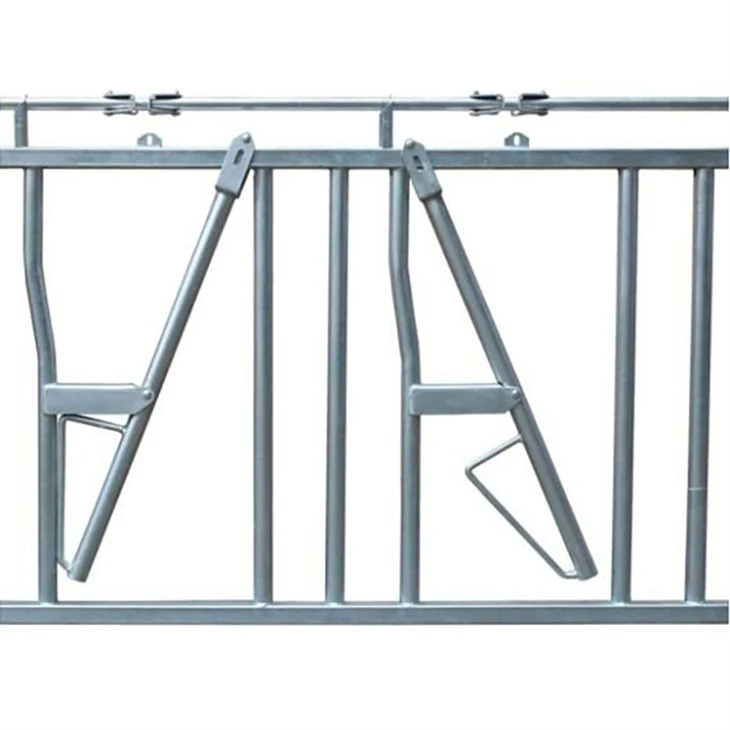
In the agricultural industry, our moveable rods find a wide range of applications. For instance, they are used in the construction of 600mm Cow Neck Clamp and 500mm Cow Neck Clamp. These neck clamps are often installed in outdoor feeding areas, where they are constantly exposed to sunlight. The UV - resistant property of our moveable rods ensures that the neck clamps remain in good condition for a long time, reducing the need for frequent replacements.
Another important application is in Sloped Feed Rails. These feed rails are designed to provide easy access to feed for livestock. Since they are located outdoors, they are exposed to the elements, including UV rays. Our moveable rods, with their excellent UV resistance, contribute to the durability and reliability of these feed rails, ensuring a stable and long - lasting feeding system for farmers.
Maintenance Tips for UV - Exposed Moveable Rods
While our moveable rods are highly resistant to UV rays, proper maintenance can further extend their lifespan. Here are some tips:

- Regular Cleaning: Clean the moveable rods regularly with a mild detergent and water. This helps to remove dirt, dust, and other contaminants that can accumulate on the surface and potentially accelerate the degradation process.
- Inspection: Periodically inspect the rods for any signs of damage, such as cracks, fading, or loss of flexibility. If any issues are detected, take appropriate measures to repair or replace the affected parts.
- Avoid Abrasive Cleaning Tools: When cleaning the rods, avoid using abrasive cleaning tools, as they can scratch the surface and compromise the protective coating.
- Storage: If the moveable rods are not in use for an extended period, store them in a cool, dry place away from direct sunlight. This can help to reduce their exposure to UV rays and other environmental factors.
Contact Us for Procurement
We understand that the quality and durability of moveable rods are of utmost importance to our customers. Whether you are in the agricultural industry or any other sector that requires reliable moveable rods, we are here to provide you with the best products.
If you are interested in purchasing our moveable rods or have any questions about their UV resistance, performance, or applications, please feel free to contact us. We have a team of experts who can provide you with detailed information and assist you in making the right choice for your specific needs.
References
- "Polymer Degradation and Stability" by A. L. Andrady and S. Halada.
- "Ultraviolet Radiation: Effects on Materials" by the National Institute of Standards and Technology.
- "Agricultural Engineering Handbook" for information on the use of moveable rods in agricultural applications.