




What is the heat treatment process for a toothed chain wheel?
 Jul 14, 2025|
 As a trusted toothed chain wheel supplier, I'm excited to delve into the intricacies of the heat treatment process for toothed chain wheels. Heat treatment is a critical step in the manufacturing of toothed chain wheels, as it significantly enhances their mechanical properties, durability, and performance. In this blog post, I'll walk you through the various stages of the heat treatment process, explain their importance, and highlight how they contribute to the overall quality of our toothed chain wheels.
Understanding the Basics of Heat Treatment
Heat treatment is a controlled process that involves heating and cooling metals to alter their physical and mechanical properties. For toothed chain wheels, heat treatment is primarily used to improve hardness, strength, wear resistance, and toughness. By carefully controlling the heating and cooling rates, we can achieve the desired microstructure and properties in the chain wheels.
The Heat Treatment Process for Toothed Chain Wheels
The heat treatment process for toothed chain wheels typically consists of several stages, each with its own specific purpose and parameters. Let's take a closer look at each stage:
1. Annealing
Annealing is the first step in the heat treatment process, and it involves heating the toothed chain wheels to a specific temperature and holding them at that temperature for a certain period of time. This process helps to relieve internal stresses, improve machinability, and refine the grain structure of the metal. There are different types of annealing, such as full annealing, partial annealing, and stress relief annealing, each suitable for different materials and applications.
During annealing, the chain wheels are heated to a temperature above the critical point, which is the temperature at which the metal undergoes a phase transformation. The heating rate is carefully controlled to ensure uniform heating throughout the chain wheels. Once the desired temperature is reached, the chain wheels are held at that temperature for a specified time to allow for complete transformation of the microstructure. After that, the chain wheels are slowly cooled to room temperature, which helps to prevent the formation of new internal stresses.
2. Normalizing
Normalizing is similar to annealing, but it involves heating the toothed chain wheels to a slightly higher temperature and then cooling them in air. This process helps to refine the grain structure, improve the mechanical properties, and make the chain wheels more uniform in terms of hardness and strength. Normalizing is often used as a pre-treatment before further heat treatment processes, such as quenching and tempering.
The heating rate and holding time for normalizing are also carefully controlled to ensure optimal results. By cooling the chain wheels in air, we can achieve a faster cooling rate compared to annealing, which helps to produce a finer grain structure and improved mechanical properties. Normalizing is particularly useful for chain wheels made of medium carbon steels, as it can enhance their strength and toughness.
3. Quenching
Quenching is a rapid cooling process that involves immersing the heated toothed chain wheels in a quenching medium, such as oil, water, or polymer solution. This process is used to harden the chain wheels by transforming the austenite phase of the metal into martensite, a hard and brittle phase. Quenching is a critical step in the heat treatment process, as it determines the hardness and strength of the chain wheels.
The choice of quenching medium depends on several factors, including the material of the chain wheels, the desired hardness, and the size and shape of the chain wheels. Oil quenching is commonly used for toothed chain wheels, as it provides a slower cooling rate compared to water quenching, which helps to reduce the risk of cracking and distortion. Polymer solutions are also used in some cases, as they offer a more controlled cooling rate and can provide better surface finish.
During quenching, the chain wheels are heated to a temperature above the critical point and then rapidly cooled in the quenching medium. The cooling rate must be fast enough to ensure the formation of martensite, but not too fast to cause cracking or distortion. After quenching, the chain wheels are usually very hard and brittle, and they require further treatment to relieve internal stresses and improve their toughness.
4. Tempering
Tempering is the final step in the heat treatment process, and it involves heating the quenched toothed chain wheels to a temperature below the critical point and holding them at that temperature for a certain period of time. This process helps to relieve internal stresses, reduce brittleness, and improve the toughness and ductility of the chain wheels. Tempering is essential to balance the hardness and toughness of the chain wheels, making them suitable for their intended applications.
The tempering temperature and holding time are carefully selected based on the desired properties of the chain wheels. By heating the chain wheels to a specific temperature, we can control the amount of martensite that is transformed into a more ductile and tough microstructure, such as tempered martensite or bainite. Tempering can also improve the wear resistance and fatigue resistance of the chain wheels, making them more durable and reliable in service.

Importance of Heat Treatment for Toothed Chain Wheels
The heat treatment process plays a crucial role in the performance and durability of toothed chain wheels. Here are some of the key benefits of heat treatment:
- Improved Hardness and Wear Resistance: Heat treatment can significantly increase the hardness of the toothed chain wheels, making them more resistant to wear and abrasion. This is especially important in applications where the chain wheels are subjected to high loads and friction, such as in industrial machinery and automotive engines.
- Enhanced Strength and Toughness: By carefully controlling the heat treatment process, we can improve the strength and toughness of the chain wheels, allowing them to withstand high stresses and impacts without breaking or deforming. This is essential for ensuring the reliability and safety of the equipment in which the chain wheels are used.
- Better Dimensional Stability: Heat treatment can help to relieve internal stresses and reduce the risk of distortion and cracking during machining and service. This ensures that the toothed chain wheels maintain their precise dimensions and shape, which is crucial for proper functioning and smooth operation.
- Increased Fatigue Resistance: Heat treatment can improve the fatigue resistance of the chain wheels, allowing them to withstand repeated loading and unloading cycles without failure. This is particularly important in applications where the chain wheels are subjected to cyclic stresses, such as in conveyor systems and power transmission equipment.
Applications of Toothed Chain Wheels
Toothed chain wheels are widely used in various industries and applications, including:
- Automotive Industry: Toothed chain wheels are used in engines, transmissions, and other automotive components to transmit power and motion. They are known for their high efficiency, smooth operation, and durability, making them ideal for use in automotive applications.
- Industrial Machinery: Toothed chain wheels are used in a variety of industrial machinery, such as conveyors, packaging machines, and machine tools. They are capable of transmitting high loads and torque, and they can operate at high speeds, making them suitable for use in industrial environments.
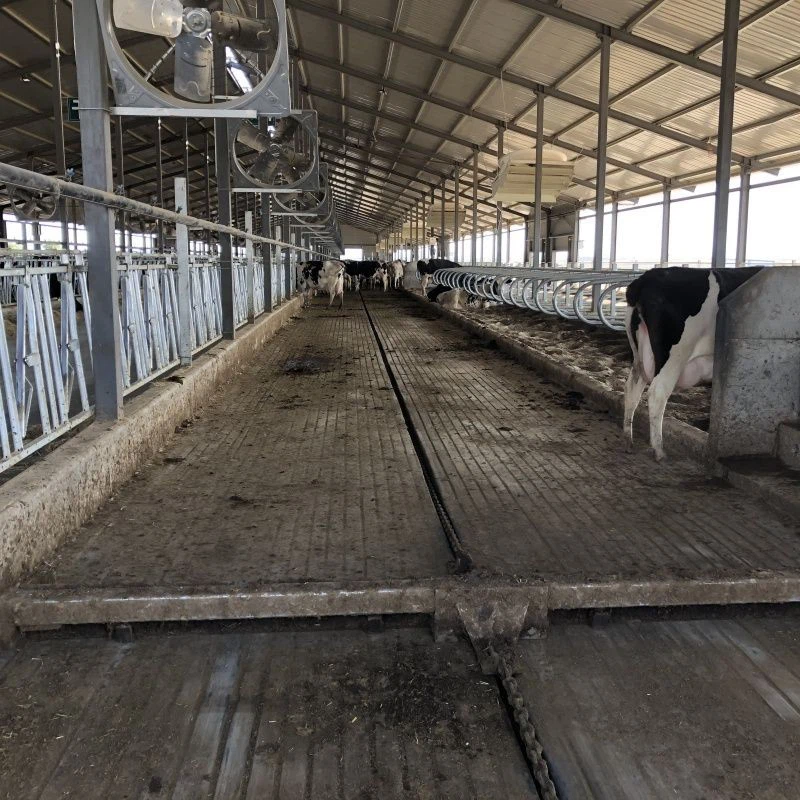
- Agricultural Equipment: Toothed chain wheels are used in agricultural equipment, such as tractors, combines, and manure scrapers. They are designed to withstand harsh operating conditions and heavy loads, and they can provide reliable power transmission in agricultural applications. For example, in manure scrapers, toothed chain wheels are used in conjunction with Speed Reducer for Manure Scraper and GFB1 - 1 Usage Manure Removal Equipment to efficiently remove manure from barns. Single Axis Manure Scraper also relies on high - quality toothed chain wheels for smooth and reliable operation.
- Power Transmission Systems: Toothed chain wheels are used in power transmission systems to transfer power from one shaft to another. They are commonly used in applications where precise timing and synchronization are required, such as in printing presses and textile machinery.
Contact Us for Your Toothed Chain Wheel Needs
If you're in the market for high - quality toothed chain wheels, look no further. As a leading supplier of toothed chain wheels, we have the expertise and experience to provide you with the best products that meet your specific requirements. Our toothed chain wheels are manufactured using the latest technology and undergo strict quality control measures to ensure their performance and reliability.
Whether you need standard or custom - designed toothed chain wheels, we can work with you to develop the perfect solution for your application. We offer a wide range of materials, sizes, and tooth profiles to choose from, and we can also provide heat treatment services to enhance the properties of our chain wheels.
Contact us today to discuss your toothed chain wheel needs and start a procurement negotiation. We're committed to providing you with excellent customer service and high - quality products at competitive prices.
References
- Metals Handbook: Heat Treating, Volume 4, ASM International.
- Heat Treatment Principles and Techniques, L. Torben and H. J. Grabke.
- Manufacturing Engineering and Technology, S. Kalpakjian and S. R. Schmid.