




What is the performance of a solid liquid separator in industrial applications?
 Dec 05, 2025|
A solid liquid separator is a crucial piece of equipment in various industrial applications. As a supplier of solid liquid separators, I've witnessed firsthand the significant role these machines play in enhancing efficiency, reducing waste, and improving overall productivity in different sectors. In this blog, I'll delve into the performance of solid liquid separators in industrial applications, highlighting their functions, benefits, and real - world examples.
How Solid Liquid Separators Work
Solid liquid separators operate on the fundamental principle of separating a mixture of solids and liquids into two distinct components. There are several types of solid liquid separators, including centrifugal separators, filter presses, and spiral press separators. Each type has its unique working mechanism.
Centrifugal separators use centrifugal force to separate solids from liquids. When the mixture is spun at high speeds, the denser solid particles are forced to the outer edges of the separator, while the lighter liquid remains in the center. This separation method is highly efficient and can handle large volumes of mixtures quickly.
Filter presses, on the other hand, use pressure to force the liquid through a filter medium, leaving the solids behind. The filter medium can be a cloth, paper, or other porous material that allows the liquid to pass through while retaining the solid particles. Filter presses are known for their ability to achieve high levels of separation and are often used in applications where a dry solid cake is required.
The 7.5kw Spiral Press Separator is another popular type of solid liquid separator. It works by using a rotating screw or auger to convey the mixture through a tapered chamber. As the mixture moves through the chamber, the pressure increases, forcing the liquid out through small holes in the chamber wall while the solids are compacted and discharged at the end.
Performance in Different Industrial Applications
Food and Beverage Industry
In the food and beverage industry, solid liquid separators are used for a variety of purposes. For example, in fruit juice production, separators are used to remove pulp and seeds from the juice, resulting in a clear and smooth product. They can also be used in the brewing industry to separate yeast and other solids from the beer during the fermentation process.
The performance of solid liquid separators in this industry is critical for maintaining product quality and consistency. By removing unwanted solids, the separators help to improve the taste, appearance, and shelf - life of the final products. Additionally, they can reduce the risk of spoilage and contamination, ensuring that the products meet strict food safety standards.
Chemical Industry
The chemical industry relies heavily on solid liquid separators for processes such as crystallization, filtration, and purification. In chemical manufacturing, separators are used to separate reaction products from solvents, catalysts, and other impurities. This is essential for obtaining high - purity chemicals and ensuring the efficiency of the production process.

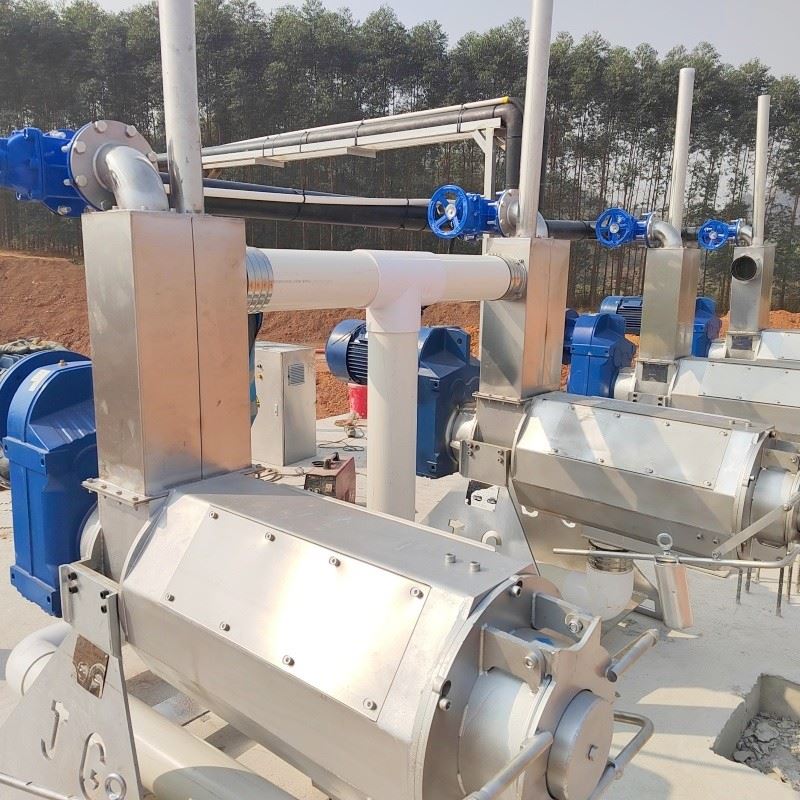
The 11 Kw Manure Separator Dewatering Machine can also find applications in some chemical waste treatment processes. It can effectively separate solid waste from liquid waste, reducing the volume of waste and making it easier to handle and dispose of.
Wastewater Treatment
Wastewater treatment is one of the most important applications of solid liquid separators. In municipal and industrial wastewater treatment plants, separators are used to remove suspended solids, sludge, and other contaminants from the water. This helps to improve the quality of the treated water and reduce the environmental impact of wastewater discharge.
Solid liquid separators in wastewater treatment can significantly reduce the load on downstream treatment processes, such as biological treatment and disinfection. By removing a large portion of the solids upfront, the separators can improve the efficiency of these processes and reduce the cost of treatment.
Agriculture
In the agricultural sector, solid liquid separators are used for manure management and slurry separation. The Auger Shaft is an important component in many agricultural solid liquid separators. Separating manure into solid and liquid fractions can have several benefits. The solid fraction can be used as a high - quality organic fertilizer, while the liquid fraction can be used for irrigation or further treatment.
This not only helps to manage agricultural waste more effectively but also reduces the environmental pollution caused by manure runoff. Additionally, the separated solid manure can be easier to store and transport, making it more convenient for farmers to use.
Benefits of Using Solid Liquid Separators
Efficiency
One of the primary benefits of solid liquid separators is their ability to improve the efficiency of industrial processes. By separating solids from liquids quickly and effectively, these machines can reduce the time and energy required for downstream processing. For example, in a chemical manufacturing process, a separator can remove impurities before the product enters a distillation column, reducing the energy consumption of the distillation process.
Cost - Savings
Solid liquid separators can also lead to significant cost - savings. By reducing the volume of waste and improving the quality of products, companies can save on disposal costs and increase the value of their products. In wastewater treatment, for instance, a well - functioning separator can reduce the need for expensive chemical additives and sludge disposal, resulting in lower operating costs.
Environmental Protection
Using solid liquid separators can have a positive impact on the environment. In industries such as food and beverage, chemical, and wastewater treatment, these machines can help to reduce pollution by removing harmful substances from waste streams. In agriculture, manure separation can reduce the release of nutrients and pathogens into water bodies, protecting water quality.
Real - World Examples of Performance
Let's take a look at some real - world examples of how solid liquid separators perform in industrial applications. A food processing company was facing challenges with the quality of its tomato sauce. The sauce contained a large amount of pulp and seeds, which affected its texture and appearance. After installing a high - performance solid liquid separator, the company was able to remove the unwanted solids, resulting in a smoother and more consistent tomato sauce. The separator not only improved the quality of the product but also increased the production capacity by reducing the time required for manual filtration.
In a wastewater treatment plant, a new solid liquid separator was installed to replace an outdated system. The new separator was able to remove a higher percentage of solids from the wastewater, reducing the load on the biological treatment process. As a result, the plant was able to achieve better water quality with less energy consumption and lower chemical usage.
Conclusion
The performance of solid liquid separators in industrial applications is outstanding. These machines play a vital role in various industries, from food and beverage to wastewater treatment and agriculture. Their ability to separate solids from liquids efficiently, reduce costs, and protect the environment makes them an indispensable part of modern industrial processes.
If you're looking for a reliable solid liquid separator for your industrial application, we are here to help. Our company offers a wide range of high - quality solid liquid separators that are designed to meet the specific needs of different industries. Whether you need a separator for a small - scale food processing operation or a large - scale wastewater treatment plant, we have the right solution for you.
If you are interested in our solid liquid separators or have any questions about their performance and suitability for your application, please don't hesitate to contact us. We look forward to discussing your requirements and providing you with the best possible solution.
References
- Perry, R. H., & Green, D. W. (1997). Perry's Chemical Engineers' Handbook. McGraw - Hill.
- Metcalf & Eddy. (2003). Wastewater Engineering: Treatment and Reuse. McGraw - Hill.
- ASABE Standards. (2018). American Society of Agricultural and Biological Engineers.